MANUFACTURING, JOBS & NATIONAL SECURITY
A planned $15 billion integrated steel complex in eastern Iowa is being presented as one of the largest industrial investments in American history. The proposal matters because it aims to connect Minnesota iron ore, Mississippi River logistics and modern electric-arc steelmaking inside one domestic supply chain. But it is still a multiyear project, not steel arriving on the market today.
The practical conclusion: the announcement is a serious industrial signal, but the household and market payoff depends on milestones that remain ahead: a final site, permits, financing, utility agreements, construction, workforce recruitment and a successful production ramp. Readers should separate the announced investment and projected capacity from spending already completed and output already available.
What Happened
On September 28, President Donald Trump, Iowa Governor Kim Reynolds and Mesabi Metallics Chairman Rewant Ruia announced plans for a new fully integrated steel complex in eastern Iowa. The White House described a $15 billion project expected to create 1,750 permanent jobs, support as many as 6,000 construction jobs and add a projected $95 billion to the U.S. economy over ten years.
The initial phase is expected to produce 7.5 million tons of steel annually, with possible expansion toward roughly 10 million tons. Senator Joni Ernst’s office said production could begin as soon as 2030. Iowa officials have not yet published a precise site, incentive package, permitting calendar or construction schedule.
What the Project Would Contain
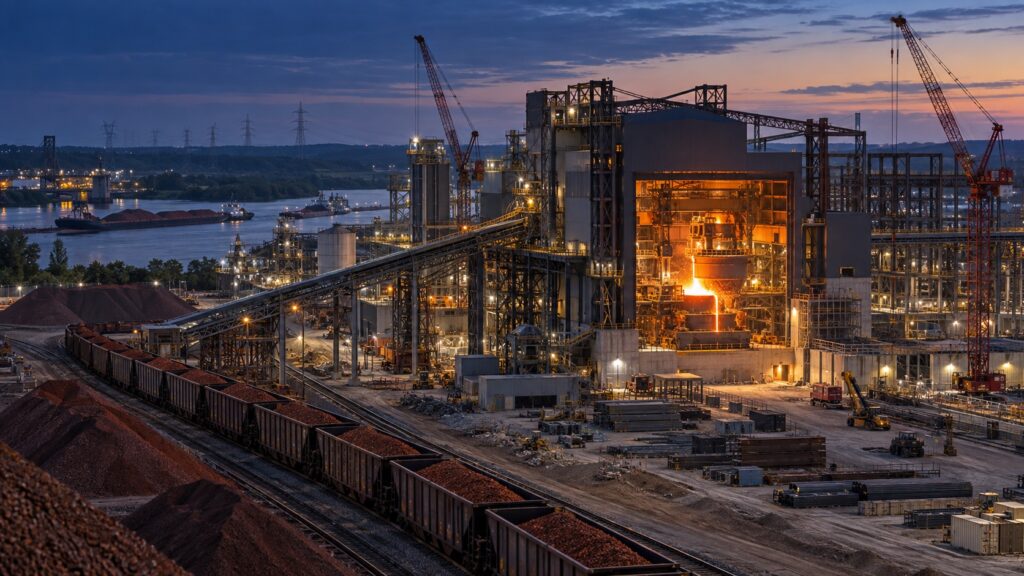
The concept is built around vertical integration. Mesabi Metallics is starting up a $2.5 billion iron-ore mine and direct-reduction-grade pellet plant in Nashwauk, Minnesota. The proposed Iowa complex would take domestic ore and combine it with recycled scrap steel in electric-arc furnaces. An eastern Iowa location would provide access to the Mississippi River as well as rail and power infrastructure.
Direct-reduction-grade pellets are designed for newer steelmaking routes that can use electric-arc furnaces rather than relying entirely on traditional blast furnaces. That can support flexible production and a larger role for recycled metal. It does not make the operation automatically cheap or low-emission; the outcome depends on electricity prices, furnace design, metallic inputs, transportation and the final production configuration.
The project’s Minnesota feedstock is further along than the Iowa mill. An SEC-filed company release says Mesabi completed its first production blast in July 2026. EXIM said on September 17 that the mine and pellet operation was beginning startup and could eventually produce up to seven million tons of direct-reduction-grade pellets per year.
Why This Is Happening
Steel is both a commercial material and a strategic input. Construction, automobiles, energy infrastructure, machinery, shipbuilding and defense production all depend on reliable supply. The administration has used tariffs, permitting changes and federal financing programs to encourage domestic production and reduce dependence on imported metal and raw materials.
The economic case also reflects a shift in steel technology. Electric-arc furnaces already account for a large share of U.S. output. A new integrated chain built around higher-grade pellets and scrap could serve demand for flat products while reducing exposure to foreign feedstock. The strategic case is strongest if the project creates a durable source of competitively priced steel rather than capacity that depends permanently on exceptional protection or subsidies.
Household Impact
This announcement should not change the price of a car, appliance or home project this year. The first production target is around 2030, and steel represents only one portion of the final cost of most consumer products. Labor, energy, transportation, financing, dealer margins and other materials remain important.
Over time, additional domestic supply could reduce exposure to overseas disruptions and freight shocks. That may improve reliability for manufacturers of vehicles, appliances and building materials. Whether households see lower prices will depend on the mill’s cost structure, competition and the broader tariff environment. More capacity can restrain prices; high construction costs, expensive electricity or protected markets can offset that benefit.
For Iowa households, the more immediate channel is local labor demand. Thousands of construction roles and 1,750 planned permanent positions could lift wages and spending near the site. The same surge can pressure housing, roads, schools and utilities if infrastructure does not keep pace.
Business, Manufacturing and Market Impact
Steel buyers should treat the project as a medium-term capacity signal. Manufacturers can add it to strategic sourcing plans, but they cannot yet rely on it for delivery dates or contract pricing. The decisive commercial milestones will include site control, permits, financing close, major equipment orders, power contracts and customer offtake agreements.
Existing U.S. producers could benefit from a stronger domestic ore and pellet ecosystem while also facing a powerful new competitor later in the decade. Railroads, barge operators, electrical-equipment suppliers, engineering firms and construction contractors could see earlier opportunities. Utilities will face the challenge of supplying a large, reliable industrial load without shifting unreasonable costs to ordinary ratepayers.
Investors should distinguish the privately planned Iowa steel complex from the Minnesota mine financing. EXIM’s public materials discuss support of up to $10 billion for expansion of the Minnesota iron-ore operation, and its September 24 board agenda identified a final approval decision for that mine and pellet plant. Those documents do not by themselves establish committed financing for the Iowa mill.
Key Numbers
- $15 billion: announced investment for the Iowa steel complex.
- 7.5 million tons: planned annual steel capacity in the first phase.
- About 10 million tons: potential capacity after expansion.
- 1,750: projected permanent jobs.
- Up to 6,000: projected construction jobs.
- 2030: earliest publicly stated production target.
Timeline
2026: announcement, site and development work; Minnesota mine and pellet startup advances.
2027–2029: expected window for permits, financing, engineering, utility work and major construction, subject to company and regulatory decisions.
2030 or later: earliest target for initial Iowa steel production, followed by commissioning and a production ramp.
The middle steps are an analytical reconstruction of what a project of this scale normally requires, not a company-issued schedule.
Risk Matrix
Execution risk — high: a $15 billion industrial build requires complex engineering, equipment and contractor coordination.
Financing risk — meaningful: announced investment is not the same as closed debt and equity commitments.
Power and infrastructure risk — meaningful: electric-arc steelmaking needs large, dependable power, rail and river logistics.
Market risk — medium: steel demand, imports and prices could look different by 2030.
Strategic value — potentially high: a successful domestic ore-to-steel chain could strengthen resilience for manufacturing and defense.
Winners and Losers
Potential winners: Iowa construction workers, skilled trades, Minnesota miners, rail and barge operators, equipment suppliers and manufacturers seeking another domestic source.
Potentially pressured: competing mills if new capacity arrives faster than demand, communities facing infrastructure strain and ratepayers if incentives or grid upgrades are poorly allocated.
Too early to classify: consumers. More domestic supply can help, but only after construction and only if cost savings reach finished products.
What to Watch
- Iowa governor’s project announcement
- Senator Ernst’s timeline and capacity summary
- EXIM’s Minnesota mine update
- EXIM board record for the Minnesota project
- SEC-filed first-blast announcement
Action Checklist
- Track the final Iowa site and local incentive package.
- Separate financing for the Minnesota mine from financing for the Iowa mill.
- Watch for state and federal permit filings.
- Monitor utility and transmission agreements for ratepayer exposure.
- Look for equipment orders, construction awards and customer contracts.
- Treat the 2030 date as a target until a detailed schedule is published.
Choose Our Next Deep Dive
Financing Map | Household Price Chain | Jobs & Infrastructure
Ask the Analyst
Reply with your question about steel prices, jobs, financing or infrastructure.
Sources & Methodology
- White House release: https://www.whitehouse.gov/releases/2026/09/mined-melted-and-poured-in-america-president-trump-reverses-years-of-anti-mining-policy/
- Iowa governor: https://governor.iowa.gov/press-release/2026-09-28/gov-reynolds-attends-white-house-announcement-nations-largest-ever-steel-manufacturing-investment
- Senator Ernst: https://www.ernst.senate.gov/news/press-releases/ernst-joins-president-trump-to-tout-transformative-15-billion-steel-investment-in-iowa
- EXIM: https://www.exim.gov/news/exim-chairman-visits-americas-first-new-iron-ore-mine-50-years-operations-begin-northern
- SEC filing: https://www.sec.gov/Archives/edgar/data/2087398/000110465926083555/tm2620514d1_ex99-1.htm
Investment, capacity, jobs and timing are sourced claims attributed to officials or the company. Household, market and execution implications are editorial analysis. Scenarios and risk judgments are conditional, not forecasts.
Disclosure: This article provides general information, not legal, investment or financial advice.