
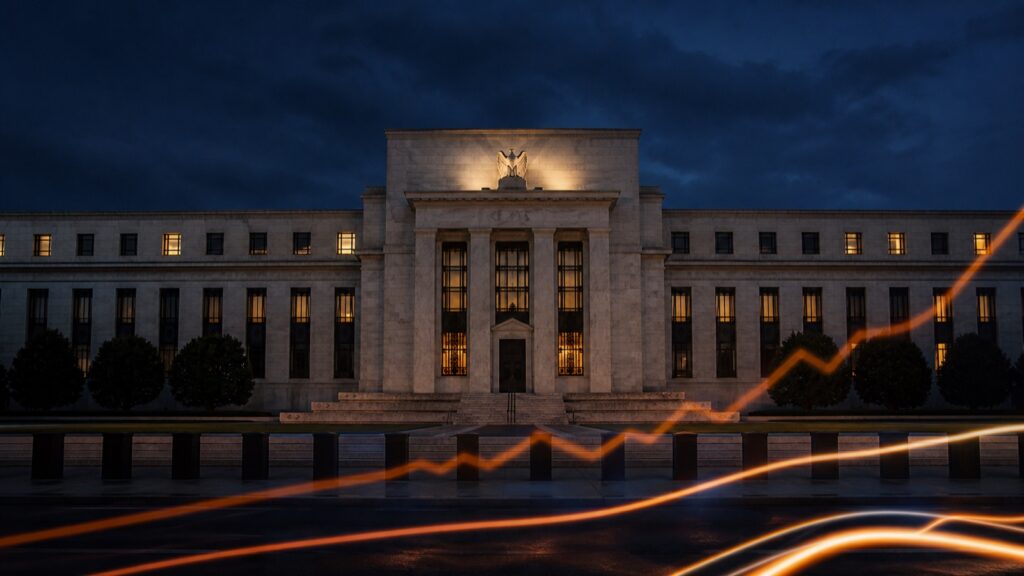
FEDERAL RESERVE
The July meeting produced three dissents for a hike, while many policymakers said tightening may be necessary if inflation does not decline.
The practical conclusion: Borrowers should not build plans around an imminent rate cut. The minutes show that the Committee held rates at 3.50%–3.75%, but the debate had shifted toward whether more restraint would be needed—not when easing would begin.
What Happened
The Federal Reserve’s minutes from the July 28–29 meeting show a more consequential disagreement than the unchanged policy rate suggested. Nine voting members supported keeping the federal funds target range at 3.50% to 3.75%. Beth Hammack, Neel Kashkari and Lorie Logan dissented in favor of a quarter-point increase. Several participants—not only the three formal dissenters—favored raising rates at the meeting.
The minutes say many participants believed policy tightening would likely be necessary if inflation did not decline. Some questioned whether financial conditions were restrictive enough to return inflation to 2%. A few participants who preferred an immediate increase argued that acting sooner could reduce the risk of a steeper and more costly series of moves later.
This is not a promise of a September hike. It is documented evidence that the policy debate has moved in a more restrictive direction. The next scheduled meeting is September 15–16, and incoming inflation, labor and activity data remain decisive.
What the Minutes Contain
The minutes record the economic information available at the meeting, the staff outlook, participants’ risk assessments and the policy discussion. They also show the difference between a recorded vote and the broader range of views around the table.
Staff estimated that total PCE inflation eased to 3.7% in June and core PCE inflation to 3.3%, but participants still described inflation as elevated. Most expected inflation to step down during the rest of the year as earlier tariff and energy effects waned. Many nevertheless warned that inflation could prove more persistent, especially if geopolitical disruptions prolonged supply pressures.
Markets had already moved toward a tighter path. The minutes say Treasury yields rose 25 to 30 basis points over the intermeeting period and that market pricing had fully incorporated a quarter-point increase by September, plus another by the end of the first quarter of 2027. The median respondent to the New York Fed’s Desk survey had a different view: no change in 2026 or 2027 and a cut in early 2028. That gap underscores uncertainty, not a reliable forecast.
Why This Is Happening
The central problem is that economic activity remained solid while inflation stayed above target. Participants saw stable labor conditions, resilient spending and concentrated strength in AI-related investment. Those conditions reduce the urgency to ease and give policymakers room to wait for clearer evidence.
At the same time, the inflation mix is unusually complicated. Tariffs, energy costs, the Middle East conflict and AI-related demand were all discussed. Some business contacts were absorbing costs through thinner margins, while others could eventually pass them to customers. Participants also debated whether AI would raise demand and prices first or lift productivity and supply later.
The minutes do not establish a single cause for inflation. They show policymakers confronting several overlapping channels and placing greater weight on the risk that inflation remains high for too long.
Household Impact
For households, the immediate message is about duration. Credit-card rates, home-equity borrowing, auto financing and adjustable-rate debt can remain expensive when the policy rate stays elevated. Fixed mortgage rates do not move one-for-one with the federal funds rate, but a more restrictive expected path can keep Treasury yields and mortgage pricing under pressure.
Savers may continue to find attractive yields on insured deposits and short-term Treasury securities, although each product carries different liquidity, tax and reinvestment considerations. Borrowers should compare annual percentage rates and total dollars paid rather than waiting for an assumed near-term cut.
Low- and moderate-income households received specific attention in the minutes: some participants said inflation was eroding their real disposable income. That makes cash-flow resilience—not a rate forecast—the practical priority.
Business and Market Impact
Businesses should test projects against financing costs that stay high or rise another quarter point. Small firms may feel this more acutely: the minutes characterized financing as somewhat restrictive for many small businesses even while larger companies retained broad access to credit.
For markets, the 9–3 vote matters because it converts hawkish concern into visible institutional dissent. Rate-sensitive equities, long-duration bonds, housing and highly leveraged borrowers have greater exposure if inflation stalls. Banks and money-market funds can benefit from higher short-term rates, but credit quality becomes more important as borrowing costs persist.
The minutes also flagged elevated asset valuations, record hedge-fund borrowing in repo and risks around AI infrastructure finance. These are vulnerability assessments, not predictions of a crash.
What the Minutes Do Not Tell Us
Minutes are a detailed summary, not a transcript, and they describe views held at a meeting that ended on July 29. Policymakers can update those views as new data arrive. The document therefore cannot establish how any individual will vote in September.
The market probabilities reported in the minutes are also historical snapshots from the intermeeting period. They are not Federal Reserve forecasts and can change quickly. A fully priced market outcome is still uncertain.
Finally, disagreement about the correct policy setting does not mean the institution has abandoned its framework. Participants continued to assess both sides of the dual mandate and emphasized incoming information. The value of the minutes is that they reveal the distribution of risks—not that they preannounce the next decision.
Timeline to September
Between now and September 16, the Committee will see additional inflation readings, employment reports, weekly claims, consumer and business activity indicators, and financial-market developments. Officials may also give speeches that clarify how they interpret the July debate.
Households and businesses should use that sequence as checkpoints. A single soft number may not offset persistent inflation, while a single strong number may not force a hike. A consistent pattern across inflation, wages, demand and expectations would carry more weight.
The September statement, vote and press conference will be the authoritative policy decision. Until then, the July minutes define the risk map: hold if disinflation progresses, tighten if it stalls, and reassess if employment weakens materially.
Key Numbers
- 3.50%–3.75%: federal funds target range retained in July.
- 9–3: formal vote to hold rates.
- 3: voters who preferred a quarter-point increase.
- 25–30 basis points: rise in nominal Treasury yields over the intermeeting period.
- September 15–16: next scheduled FOMC meeting.
Risk Matrix
Inflation falls: The case for holding strengthens and future easing becomes more plausible.
Inflation stalls: The minutes indicate many participants could support additional tightening.
Growth weakens sharply: Employment risks gain weight, potentially changing the balance even if inflation remains uncomfortable.
These are conditional policy paths, not forecasts.
What Washington Does Next
The Federal Reserve will receive additional inflation, employment and activity data before September. Policymakers will also watch market conditions, consumer expectations and evidence that tariff or energy effects are spreading into underlying prices. No decision was made about reducing the number of scheduled meetings; the minutes state that any future change would not affect the remainder of 2026.
What to Watch
- Read the full July FOMC minutes
https://www.federalreserve.gov/monetarypolicy/fomcminutes20260729.htm - Review the July policy statement
https://www.federalreserve.gov/newsevents/pressreleases/monetary20260729a.htm - Track the next FOMC meeting
https://www.federalreserve.gov/monetarypolicy/fomccalendars.htm - Monitor official interest-rate data
https://www.federalreserve.gov/releases/h15/
Action Checklist
- List every variable-rate balance and its reset terms.
- Compare refinancing offers using total cost, not monthly payment alone.
- Keep near-term cash in vehicles matched to your liquidity needs.
- Stress-test business investments at current rates and 25 basis points higher.
- Treat September policy outcomes as scenarios until the Fed votes.
Choose Our Next Deep Dive
September Rate Scenarios · Household Debt Exposure · AI Investment and Inflation
Ask the Analyst
What part of this report should we explain next? Reply with your question.
Sources & Methodology
Disclaimer: This material is general information, not individualized financial, investment, legal or tax advice. Verify decisions against current official data and your own circumstances.